
Bird House GeneratorLaser-cut nest boxes to NestWatch / Audubon specs
No problem: there's likely a public-library makerspace near you with a laser cutter. Many let you use the machines free with a library card; you just pay for materials.
Laser-cut nest boxes to NestWatch / Audubon specs: six species, flat-pack finger-jointed SVG. No signup.
Designer Bee's free bird house plans generator produces laser-cut nest boxes to the same dimensions Audubon, Cornell Lab of Ornithology, and NestWatch publish for each cavity-nesting species. Pick a bird (bluebird, chickadee, wren, nuthatch, tree swallow, or screech owl) and the floor size, interior height, entrance diameter, and entrance height all snap to the right values. Adjust material thickness, toggle drainage holes, and export flat-pack finger-jointed SVG panels ready for any laser cutter.
Audubon, Cornell Lab of Ornithology, and NestWatch all recommend omitting the perch. Cavity-nesting birds grip the edge of the entrance directly and don't need one. A perch mostly helps predators like squirrels, jays, and house sparrows reach the hole and harass the nest. Leaving it off is the correct design.
Floor sizes, interior heights, entrance-hole diameters, and entrance-height-above-floor follow the NestWatch "Right Bird, Right House" chart, the same specs Audubon and Cornell Lab publish. Each species has a specific entrance diameter that admits the target bird but excludes predators and competitors.
Untreated cedar, pine, or exterior plywood works well. Avoid pressure-treated lumber (chemicals can harm birds and chicks). The default thickness is 12 mm (about 1/2 in) which is the Audubon recommendation for weather resistance and predator deterrence. The smallest practical thickness is around 9 mm (3/8 in).
Four corner drainage holes (about 6 mm / 1/4 in) let any wind-driven rain escape so the nest stays dry. They also improve airflow on hot days. You can disable them under Advanced, Floor, but Audubon and NestWatch both recommend including them.
The roof is the largest removable panel: leave it press-fit (no glue) and lift it off in late winter to clean out old nesting material before the next breeding season. Audubon recommends annual cleanout.
Liked this one? These use the same kind of machine.
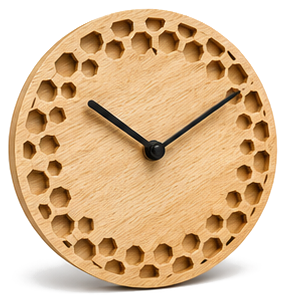
Pick a style, set the size, and export an SVG ready for laser cutting.
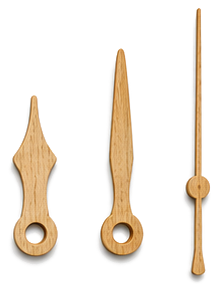
Shape the hour, minute, and second hands, export SVG or STL.
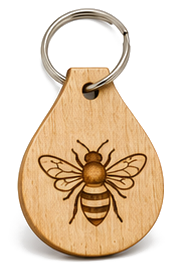
Personalized name tag with engraved symbol, export laser-ready SVG.